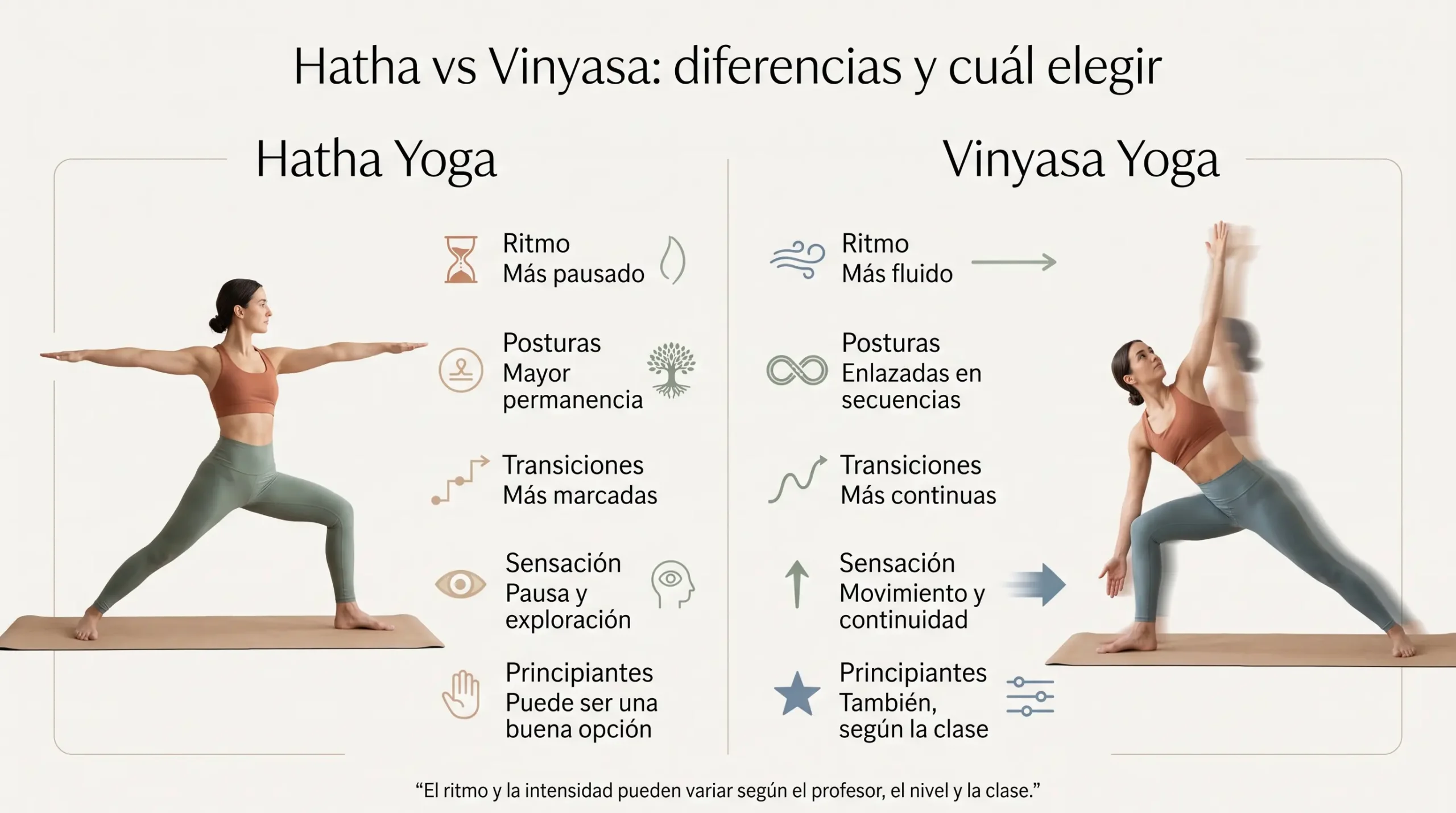
Hatha vs Vinyasa: differences and which to choose
Hatha and Vinyasa are two of the styles that come up most often when you search for yoga classes. They share postures, breathing and awareness of the body, but the experience of a class can be quite different.
The main difference is the pace: Hatha usually allows more time to hold and explore each posture, while Vinyasa links postures in more continuous sequences coordinated with the breath.
This does not mean that Hatha is always easy or that Vinyasa is necessarily intense. The level, the teacher and the way each class is structured also matter.
If you are unsure which of the two to choose, this comparison will help you decide which one to try first.
Hatha vs Vinyasa: key differences
| Aspect | Hatha | Vinyasa |
|---|---|---|
| Typical pace | Slower | More continuous and fluid |
| Postures | Usually held for longer | Often integrated into sequences |
| Transitions | More distinct and separate | A central part of the practice |
| Breathing | Supports holding and observation | Closely linked to movement |
| Overall feeling | Pausing and exploring | Movement and continuity |
| Intensity | Variable | Variable, although it usually feels more dynamic |
| For beginners | Can be a good option | Can also be suitable if the class is adapted |
This comparison is intended as a guide, not a strict rule. Two classes with the same label can be quite different depending on the teacher, level and school.
What is a Hatha Yoga class like?
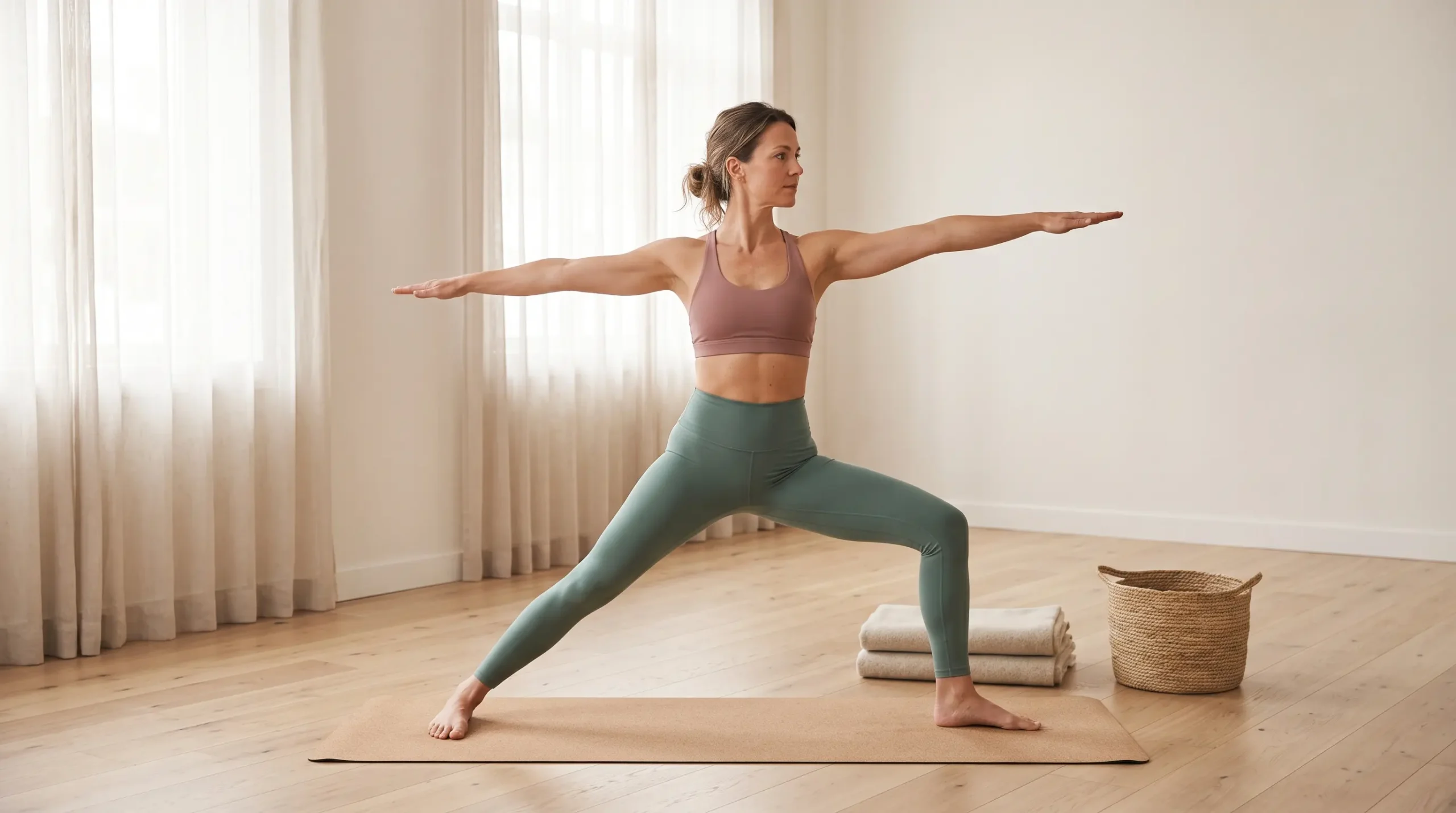
In a Hatha class, there is usually more time to move into a posture, adjust it and remain there for several breaths.
This pace allows you to observe more calmly how you position your body, what sensations arise and how your breathing responds while you hold the position.
Transitions are part of the practice, but they usually play a less prominent role than in a practice based on continuous sequences.
That is why Hatha is often perceived as a slower form of yoga. But slower does not necessarily mean easier. Holding certain postures for longer can also require strength, mobility, concentration and stability.
In addition, Hatha is a fairly broad label within modern yoga. You can find very gentle classes as well as considerably more demanding ones.
So, if you are looking for a particular class, it is worth paying attention to the level and description, not just the name of the style.
What is a Vinyasa Yoga class like?
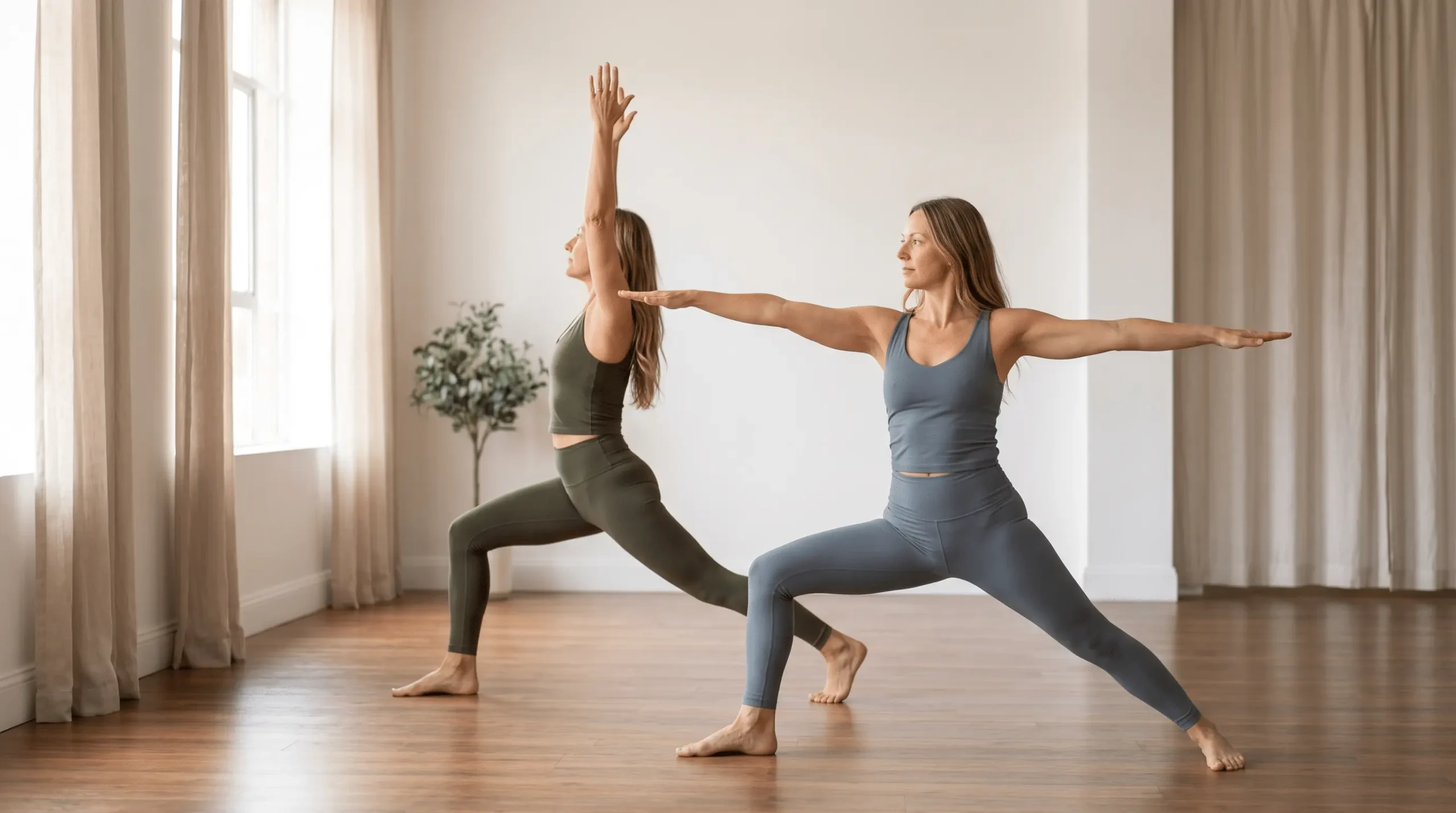
In Vinyasa, movement between postures plays a much more prominent role.
The practice is usually built around sequences in which one posture leads into the next, with the breath helping to mark the continuity of the movement.
This structure creates the sense of flow or “flow” that is often associated with Vinyasa.
Sequences may be repeated, develop throughout the session or change according to the teacher’s approach.
Because of its greater continuity of movement, Vinyasa usually feels more dynamic than Hatha. But there is no single level of intensity: there are accessible beginner classes as well as considerably more demanding options.
If you enjoy learning through movement and following sequences, it is probably a style worth trying.
Hatha or Vinyasa: which should you choose?
There is no objectively better style.
A more useful question is: what kind of experience do you want to have when you practise yoga?
Hatha may suit you better if…
- you prefer having more time in each posture;
- you are drawn to a less continuous pace;
- you want to calmly observe alignment and sensations;
- you enjoy slower transitions;
- you prefer a practice with more distinct pauses.
Choosing Hatha does not necessarily mean looking for something easy. Above all, it means that you are drawn to a way of practising that involves spending more time in the postures.
Vinyasa may suit you better if…
- you enjoy moving;
- you like linked sequences;
- you prefer a more fluid practice;
- you are drawn to coordinating breath and movement;
- you enjoy a sense of rhythm and continuity during the class.
For some people, this continuous movement makes it easier to concentrate.
Hatha or Vinyasa for beginners?
It is common to hear that Hatha is for beginners and Vinyasa is for more experienced practitioners.
That is too simplistic.
You can start with either one.
A Vinyasa class designed for beginners can introduce postures slowly, explain transitions and offer adaptations. At the same time, an advanced Hatha class may be demanding for someone who has just started.
If you are a beginner, pay particular attention to:
- the level indicated for the class;
- the expected pace;
- whether variations of the postures are offered;
- whether the teacher explains the transitions;
- the recommended previous experience.
When in doubt, asking the studio or teacher before attending will usually give you more information than the name of the style alone.
Which is more dynamic: Hatha or Vinyasa?
In general, Vinyasa tends to feel more dynamic because there is greater continuity between postures.
In a sequence, you may move from one position to another over several breaths, keeping your body moving for much of the practice.
Hatha usually includes longer holds and clearer pauses.
But that does not mean that Vinyasa is necessarily difficult or that Hatha is necessarily easy.
The actual level of challenge depends on the postures, duration, pace, adaptations, class level and teacher.
A Hatha session can be physically intense, while a beginner Vinyasa class can be very accessible.
So, Hatha or Vinyasa?
If you are still unsure, you can use this guide as a starting point.
Try Hatha first if:
- you want a generally slower pace;
- you prefer to remain in the postures for longer;
- you enjoy observing alignment and sensations;
- you are not looking for as much continuous movement.
Try Vinyasa first if:
- you enjoy movement;
- you are drawn to sequences;
- you prefer a more fluid practice;
- you like coordinating breath and movement.
Try both if:
- neither profile clearly represents you;
- you are just starting and do not yet know which way of practising you prefer;
- you want to experience the difference for yourself.
This is probably the best way to decide.
You can understand the differences by reading about them, but a real class will allow you to discover which pace, teacher and way of practising suit you best.
And you do not have to choose just one style forever. You can combine different practices depending on the moment and what you are looking for at each stage.
Would you like to try it in a class?
Now that you know the differences between Hatha and Vinyasa, you can explore yoga studios on Yogagenda and find an option that suits the way you want to practise.
Last reviewed: August 2026.